
Understanding Sock Yarn: Durability & Construction
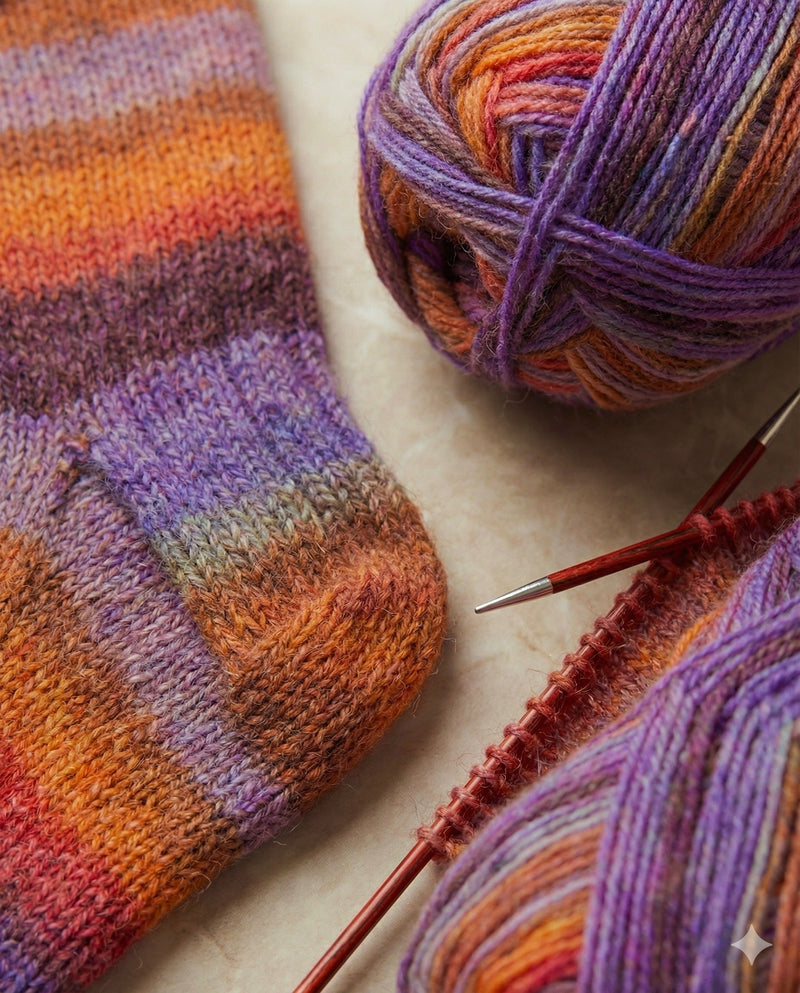
There’s little more frustrating than the first hole in a freshly knitted pair of socks. You’ve invested hours, placed every stitch with care, maybe reknit the heel three times until it fit perfectly – and then, after a few weeks of wearing, you feel it: that telltale thinning under the heel, the first fine tear between the toes.
But what if I told you that the durability of your socks doesn’t just depend on knitting but starts with the choice of yarn? The construction of a Sock Yarn – how the fibers are spun, plied, and treated – determines whether your socks become loyal companions or short-lived favorites that wear out too soon.
Let’s dive together into the fascinating world of Sock Yarn construction. Because when you understand why some yarns last for decades while others fatigue after one season, you can choose more consciously – and enjoy your knitted treasures longer.
Why Sock Yarn has to be special
Socks are the extreme athletes of our wardrobe. They are rubbed, stretched, compressed, sweat-soaked, and washed – all in an endless cycle. A sock experiences more mechanical stress in a single day than a Sweater does in an entire month.
That’s why Sock Yarn needs special properties:
- Abrasion Resistance – for heels and toes that constantly rub against shoe soles
- Elasticity – so the sock keeps its fit and doesn’t stretch out
- Shape Retention – for the perfect fit even after the tenth wear
- Durability – against thinning under heavy use
The good news? All these properties are not achieved by magic but through thoughtful construction.
The Anatomy of a Durable Sock Yarn
Fiber Blend: The Foundation of Durability
The basis of every Sock Yarn is its fibers. Pure Virgin Wool has fantastic properties – it warms, regulates moisture, and feels wonderful. But under extreme stress, it can fatigue and break.
This is where reinforcement fibers come into play:
Polyamide (Nylon) is the classic companion in Sock Yarn blends. 20-25% Polyamide gives the yarn extra tear resistance without significantly changing the feel. The synthetic Fiber surrounds and supports the Wool Fibers like an invisible support frame – especially important in high-stress areas like Heel and Toe.
Pure Wool can definitely work for socks if the construction is right. High-quality Merino yarns with a firm twist and additional reinforcement when Knitting (for example with a reinforcing thread) can be surprisingly durable. However, they require a bit more care when wearing and washing.
Silk and other luxury fibers are sometimes blended in – not necessarily for Durability, but for Sheen, smoothness, and temperature regulation. A sock blend with 10% Silk feels luxurious and can actually slightly increase wear resistance.
The Twist: Strength through Structure
This is where it gets really interesting. The way individual threads are twisted together has a huge impact on longevity.
4-ply (4ply) is the gold standard for Sock Yarn. Four individual threads are twisted together – resulting in a round, firm yarn with excellent abrasion resistance. The multiple layers protect each other: if one Fiber breaks, the other three continue to carry the load.
6-ply or 8-ply is found in especially robust yarns. More threads don’t automatically mean thicker yarn – it depends on how fine the individual threads are. A 6-ply yarn made from fine Merino threads can have the same Meterage as a 4-ply yarn but is even more resistant due to the additional layers.
The twist makes the difference: The strength of the twist – how tightly the threads are twisted together – affects both Durability and feel. A tightly twisted yarn is more durable but also feels denser. A loosely twisted yarn is softer and airier but may pill or thin out faster.
You can recognize the twist by rolling the yarn between your thumb and forefinger. Do you see individual threads wanting to come apart? Well-twisted Sock Yarn stays firmly together, even if you pull lightly.
Superwash vs. Natural: A Compromise
Superwash treatment makes wool machine washable by chemically or mechanically smoothing the scaly surface structure of the wool Fiber. The result? No surprises in the wash, no felted mini socks.
But: This process also makes the Fiber a bit smoother and less grippy. Superwash wool can stretch more easily over time and lose its shape. For socks, this is a double-edged sword – you gain ease of care but lose some Shape Retention.
Natural wool retains its scaly structure and thus its natural Elasticity. It is less forgiving in the wash, but well-knitted and hand-washed socks made from untreated wool can last for generations. The Fibers easily hook into each other, giving the knit extra stability.
Many knitters find their sweet spot somewhere in between: Superwash Sock Yarn for everyday socks that can be machine washed, and precious natural yarns for special pairs that are hand washed anyway.
Here you can read more about Superwash vs. Non-Superwash.
The hidden heroes: Meterage and yarn thickness
Not all 4-ply yarns are the same. One crucial detail is often overlooked: the Meterage per 100g.
Standard Sock Yarn has about 400-420 Meters per 100g. This results in a medium Sock Yarn that is versatile to knit and offers a good balance between durability and comfort.
Finer yarns with 450-500 Meters per 100g create more delicate, lighter socks. Perfect for summer or for people with sensitive feet. However, they are also more prone to abrasion – here reinforcement with supplementary yarn is worthwhile.
Stronger yarns with 350-380 Meters per 100g knit into sturdy, warm socks. Ideal as slippers replacement or for outdoor enthusiasts. The thicker Fibers are naturally more resilient.
Actively extend durability: Your role in knitting
Even the best yarn needs your support while knitting.
Reinforcement where it counts
Heel and toe are the critical points. These help:
- Carry a supplementary yarn (thin Polyamide or cotton yarn)
- Knit tighter – maybe half a Needle Size smaller
- Choose reinforced heel options like the heart heel
Adjust stitch count: A sock that is too loose rubs and wears out faster. Your stitch definition should be firm but not stiff. As a rule of thumb: If you can see the yarn shining through the stitches, knit one size smaller.
Proper care: Love in the laundry
- Hand Wash is the gold standard, but modern Superwash yarns also tolerate 30°C Wool Cycle
- Wash inside out protects the outside
- Lay Flat to Dry prevents stretching
- Rotate socks – give each pair a rest day between wears so the fibers can recover
The agony of choice: Which sock yarn suits you?
For beginners, a classic 4-ply sock yarn with 20-25% Polyamide, preferably Superwash, is recommended. It forgives small irregularities and is easy to care for, e.g., Gründl HOT SOCKS Madena.
Experienced knitters might experiment with natural yarns, unusual fiber blends, or extra fine constructions for tailored projects.
For house socks, it can also be a thicker, cozy yarn – durability is less critical here, comfort is the priority.
The conclusion: Knowledge makes it last
Sock Yarn is more than just yarn in sock yarn weight. It is a thoughtful combination of fiber choice, twisting, treatment, and construction – developed to withstand the challenges our feet put it through daily.
If you understand what the numbers on the label mean, you can choose consciously: Which properties are important to you? Do you need maximum durability for work socks? Or are you looking for the delicacy of a fine summer pair?
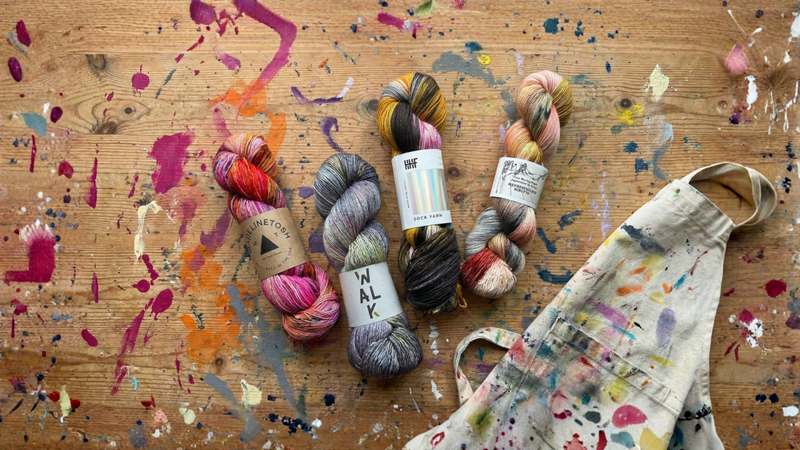
In our assortment, you will find sock yarns from renowned manufacturers who master this balance (all sock yarns). From classic 4-ply yarns to special dyeings – each with its own story about durability and character.
Your next socks can become faithful companions. The foundation for this is already laid when you choose your yarn. Enjoy knitting – and wearing your handmade treasures for a long time.
