Cotton and wool – at first, that sounds like a contradiction. Wool is warm, springs back, and feels soft and elastic when worked. Cotton is cool, heavy, and has no natural springiness. So why would you spin two fibers with such different properties together into one yarn?
Because the result is better than either ingredient alone.
This article explains why cotton-wool blend yarns are so popular, the chemistry behind the fiber combination – and which specific yarns really stand out.
What wool can do – and what it can’t
Merino Wool is one of the most fascinating natural fibers. Its fine scale structure gives it natural elasticity: stitches spring back, pieces keep their shape, cables and textured stitches appear clear and defined. Wool can absorb up to 35% of its own weight in moisture without feeling wet, actively regulates temperature, and is naturally odor-resistant.
What wool is less good at: being worn in summer. Even fine Merino Wool is an insulator – and at 30 degrees Celsius outside, a wool sweater is simply too warm. For baby clothes that lie directly on sensitive skin, pure Merino can sometimes be a bit too warm, though very soft. For summer blouses, lightweight summer sweaters, and baby items, you need something lighter.
What cotton can do – and what it can’t
Cotton is the fiber of summer. It cools: cotton fibers hardly insulate, conduct body heat away, and feel fresh on the skin. Cotton is hypoallergenic – practically no one reacts to it. It is easy to care for, often machine washable at higher temperatures, and durable.
What cotton can’t do: spring back. The fiber has almost no natural elasticity. This has direct consequences when knitting: stitches sit exactly as you knit them – no give, no automatic smoothing out by the material. Textured stitches like cables or relief patterns are less pronounced in pure cotton. And cotton pieces can stretch over time because the fibers give under their own weight.
What happens when you combine both?
A well-designed cotton-wool blend yarn takes the strengths of both fibers and minimizes the weaknesses:
The cooling effect of cotton: the yarn is lighter and less warm than pure Merino – pleasant for warm seasons and for baby clothes worn indoors.
The elasticity of wool: stitches sit clearly, cables and patterns stand out, the piece keeps its shape – because the wool content provides the springiness that cotton alone lacks.
Easy care: cotton-Merino blends with superwash-treated Merino are machine washable. KFO Cotton Merino is, however, not superwash and is cared for by hand washing in cold water.
Softness: the cotton content makes the yarn softer and more skin-friendly than many pure wool yarns – important for baby clothes and close-to-skin wearables.
Specific yarns and what they can do
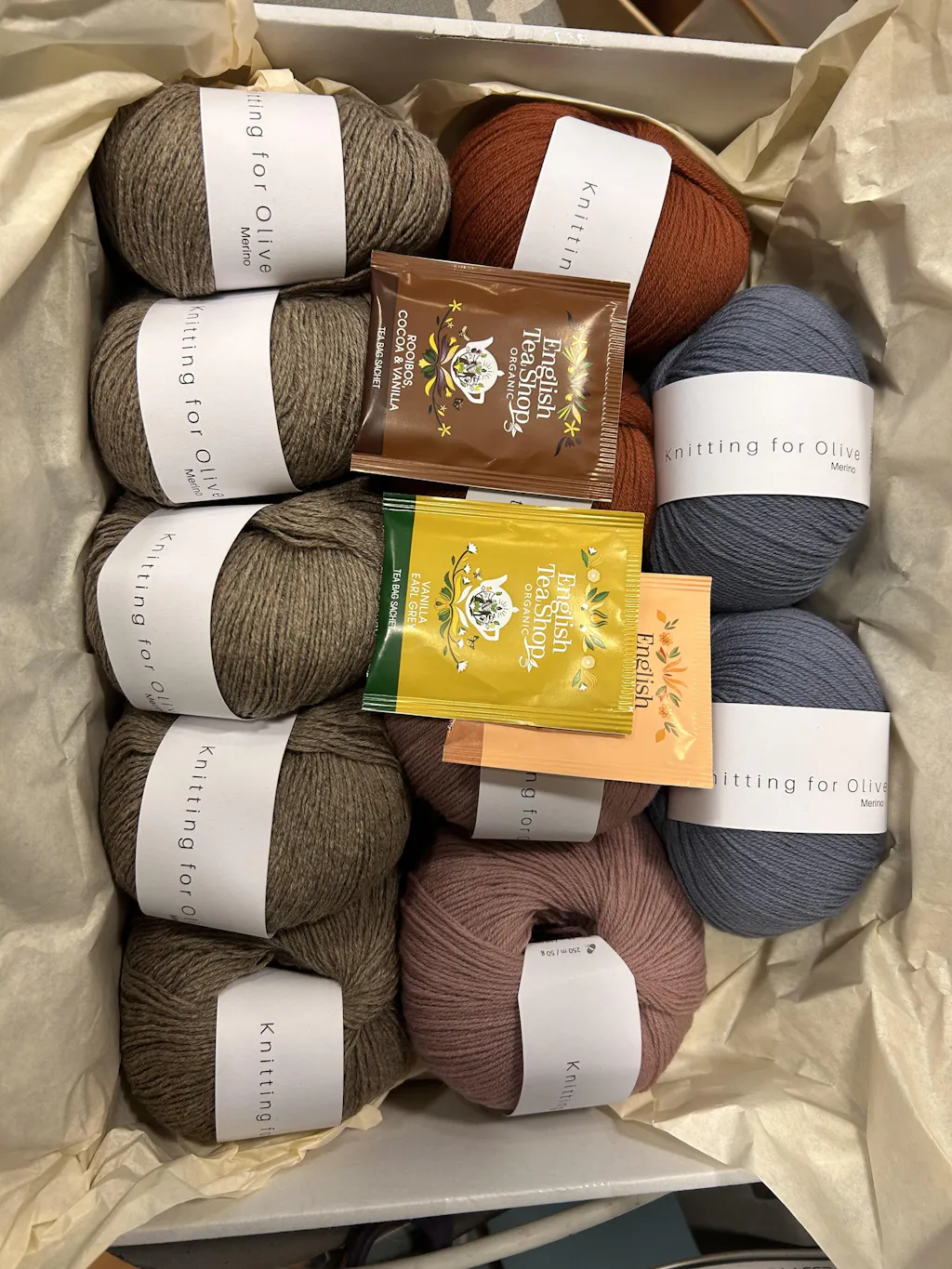
Knitting for Olive Cotton Merino
This is the prime example of a well-thought-out cotton-Merino blend yarn. KFO Cotton Merino consists of Organic Cotton and Merino Wool – OEKO-TEX® Standard 100 certified, meaning tested for harmful substances.
What makes this yarn special: the composition is so balanced that you can feel both fibers without one dominating the other. It is noticeably lighter than KFO Heavy Merino, but has significantly more springiness than pure cotton. On the needle, it feels pleasant – not slippery (like pure cotton sometimes), not too grabby (like some wools).
The finished piece looks neat. Stitches sit well. If you knit a light little sweater or a baby jacket in Cotton Merino and place it next to a sweater knitted from pure cotton – the difference is immediately visible: the stitches are more even, the texture more stable, the sweater more beautiful.
Ideal For: baby clothes and baby blankets, lightweight summer sweaters and cardigans, spring and autumn pieces, anyone who finds wool a bit too warm.
Needle Size: approx. 3–4.5mm
Certification: OEKO-TEX® Standard 100
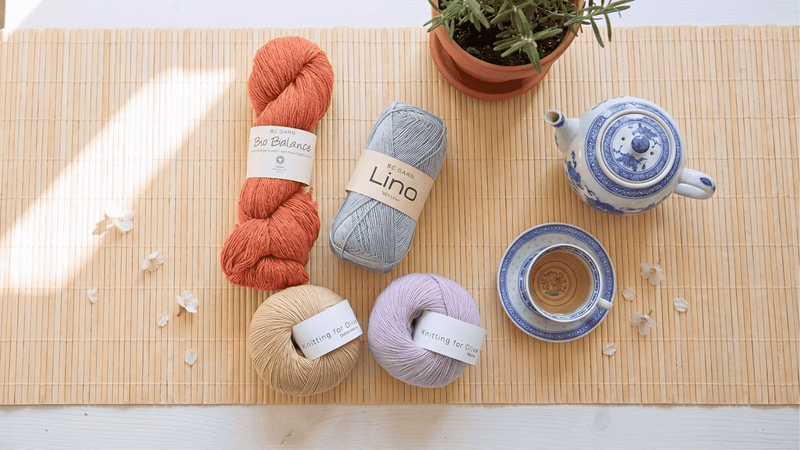
BC Garn Lino (100% Linen)
A special case in the assortment: BC Garn Lino is not a blend yarn but a pure linen yarn – an independent, plant-based alternative to cotton-Merino blends for summer.
Linen cools even more than cotton – it conducts heat especially well and feels almost cool in warm weather. Linen is also very strong: it has high tear resistance and gives pieces shape retention that pure cotton yarns lack. This is important for bags, summer tops, and lightweight shawls where shape retention is desired but wool elasticity is not needed.
The character of Lino is natural: it looks and feels like a natural, honest material – not shiny, not soft in the Merino sense, but firm and natural. With every wash, Lino becomes softer and the linen fibers relax – the yarn improves with age.
Ideal For: summer tops and blouses, bags and pouches, lightweight scarves and shawls, baby summer clothing
Needle Size: approx. 2.5–3.5mm
Special Feature: becomes softer with every wash
BC Garn Bio Balance GOTS (55% Wool, 45% Cotton)
Here the wool content dominates – which makes this yarn warmer and more elastic than Cotton Merino. Bio Balance is GOTS-certified (Global Organic Textile Standard): this means not only organically grown fibers but also certified production chains with social standards.
Bio Balance is suitable for projects where sustainability matters: sweaters and jackets that should offer a bit more warmth than Cotton Merino but are lighter than pure Merino due to the cotton content. The GOTS certification makes it a conscious choice for sustainability-oriented knitters.
Ideal For: sweaters and cardigans with sustainability claims, children’s clothing, everyday projects
Needle Size: approx. 3–3.75mm
Certification: GOTS
Why are blend yarns so practical for knitting?
Beyond fiber technology, there is a simple practical reason: most people don’t know their own yarn preference exactly. Those who say about pure wool “I sometimes find it too warm” and about pure cotton “it knits unelastic” – find a solution in blend yarns without having to choose either-or.
Blend yarns also allow certifications that are harder to achieve for single fibers alone. OEKO-TEX® Standard 100 tests the finished yarn for harmful substances – regardless of which fibers it consists of. This makes certified blend yarns especially interesting for baby clothes and close-to-skin wearables.
Tips for knitting with cotton blend yarns
Knit a gauge swatch: cotton content changes knitting behavior. The elasticity is lower than with pure wool – stitches sit tighter. Knit one to two needle sizes larger than you would choose for wool if you are unsure.
Blocking helps: cotton content responds very well to damp blocking. Even tensioning sets the stitches and significantly improves the finish – especially with Cotton Merino and Lino.
Care: cotton-Merino blends with superwash treatment are machine washable on the wool program at 30–40°C. KFO Cotton Merino, for example, is not superwash – hand wash in cold water, dry flat. Read the label. Do Not Tumble Dry.