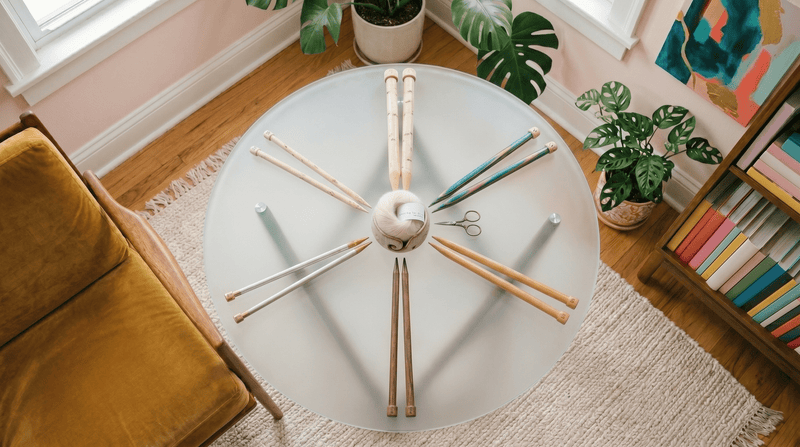
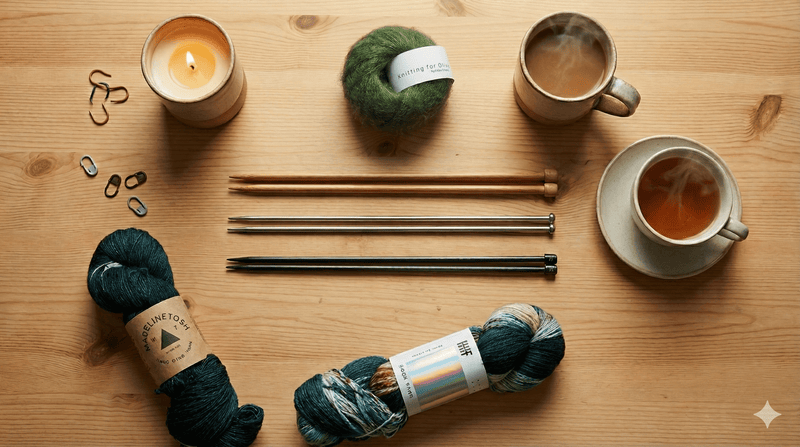
Anyone who has once felt a yarn between their fingers knows: Knitting is much more than technique – it’s rhythm, sound, temperature. And this is exactly where the magic of needle materials begins. Wood, metal, Carbon – each Material brings its own note, its own mood to your knitting piece. Even the first Cast On sounds different: the quiet glide over warm wood, the bright ring of metal, or the feather-light whisper of Carbon.
But which Material is yours? Here you’ll discover how the differences feel, which yarns and projects suit which Material – and why sometimes it’s the blend that creates the magic.
Wood – Warm, calm, natural
Wooden Knitting Needles are pure knitting romance for many. They feel warm in the hand, have a slight natural scent, and their surface conveys calm.
Characteristics of wooden needles
- Gentle on the hands: Wood absorbs Warmth quickly – ideal for cozy winter evenings.
- Good grip: The slightly matte surface prevents stitches from slipping too quickly. Especially practical with smooth yarns like Silk or alpaca blends.
- Natural & sustainable: Many wooden needles today come from FSC-certified woods or Bamboo – perfect for conscious makers.
When wood is the best choice
Wood is Ideal For projects with slippery yarns or fine stitches. Lace patterns, Mohair, or Bouclé unfold more easily because the needles provide control. Wooden needles are also wonderful for beginners – they forgive small mistakes.
Bonifaktur tip: Try holding your Favorite Yarn doubled – on wooden needles, it creates a wonderfully soft tension and an even rhythm.
➡️ Discover our wooden Knitting Needles
Metal – smooth, fast, precise
Metal knitting needles are favorites of many experienced knitters who love speed and precision. Their characteristic “clicking” has an almost meditative quality.
Characteristics of metal needles
- Extremely slippery: Ideal for yarns with high friction, like Cotton or Wool.
- Cool & stable: Metal remains shape-stable during longer projects, even with fine needle sizes.
- Durable: Hardly any wear – needles made of stainless steel or aluminum often accompany you for a lifetime.
When metal scores
Fast knitters or anyone working with tight stitches benefit from the smooth surface. Metal also ensures even stitch density in Fair Isle or textured patterns.
Bonifaktur tip: If you like working with Merino or pure Cotton, metal will delight you with effortless gliding – especially for circular knitting projects.
➡️ Find the matching metal knitting needles
Carbon – lightweight, robust, modern
Carbon needles are the newest generation in the needle universe – and feel as if air and stability form an incomparable symbiosis.
Characteristics of Carbon needles
- Light as air: The weight is barely noticeable, ideal for long knitting sessions.
- Flexible and break-resistant: Carbon offers amazing durability despite its delicate construction.
- Pleasant surface: The stitches glide smoothly – between wood and metal.
When Carbon brings balance
Carbon is perfect for avid knitters who seek the benefits of both worlds: controlled slipping without sliding, stability without a cold sensation. Especially rewarding for socks, fine sweaters, or knitting projects that switch between yarn types.
The difference in feel
Maybe you know this: The same stitch feels completely new on a different material. That’s no coincidence – every material has its own "tone color".
| Material | Tactile feel | Speed | Ideal For | Sound |
|---|---|---|---|---|
| Wood | Warm, grippy | Calm to moderate | Fluffy yarns, lace | Soft, barely audible |
| Metal | Smooth, firm | Fast | Cotton, Merino, Fair-Isle | Clear, ringing |
| Carbon | Lightweight, flexible | Medium to fast | Socks, mixed projects | Quiet, precise |
In your next project, you can consciously try this: A scarf on wood feels earthier, the same stitch on metal almost like flowing water.
Sustainability & feeling – why the choice matters
At Bonifaktur, we believe that the tool is part of creative expression. A well-chosen needle not only extends the durability of your project but also your joy in knitting.
Wood brings grounding, metal structure, Carbon lightness – and sometimes the most beautiful pieces emerge when you dare to take something new in your hand.
FAQ: Common questions about needle materials
Which knitting needles are best for beginners?
Wooden needles are ideal because their surface slightly "brakes" the stitches and feels pleasantly warm.
Why do stitches slip so easily off metal needles?
This is due to the highly smooth surface – perfect for advanced projects, but sometimes too fast for beginners.
Can different materials be combined?
Yes! Many knitters use, for example, wooden tips with metal cables or Carbon tips for certain yarn types – depending on feel and knitting speed.
Conclusion: Discover your needle feel
Whether you prefer the comforting Warmth of wood, the clarity of metal, or the modernity of Carbon – the right choice is what feels right to you personally.
Creativity comes from curiosity. So try, compare, and listen: How does your next stitch sound?
👉 Discover your personal favorite in the BONIFAKTUR Needle Collection and find your very own knitting feel.