Yarn, technique, and color choice – everything you need to know to start with or improve your skills in Nordic patterns.
What Exactly Are Norwegermuster?
Norwegermuster – also known as Nordic Knitting, Stranded Colorwork, or Fair Isle – are multicolored knitting patterns where two (sometimes three) colors are worked simultaneously in each row. The unused yarn is carried on the back of the fabric, forming so-called floats – loose strands that make the knitwear warmer and denser from the inside.
The tradition goes back centuries. Every region of Norway has its own patterns: Selbu is famous for its eight-pointed stars on Mittens and Hats. Setesdal for the wide, geometric bands on Sweaters. Fana for its delicate diamond patterns. And Lofoten for rugged fisherman's Sweaters that had to withstand wind and weather.
Today, this tradition is experiencing a renaissance – not as folkloric nostalgia, but as genuine craftsmanship that excites modern Knitters worldwide. PetiteKnit, Joji Locatelli, and other contemporary designers combine traditional Colorwork techniques with modern cuts and color palettes. The result is knitwear that honors tradition while being wearable every day.
Stranded Knitting vs. Fair Isle: What’s the Difference?
The terms are often used interchangeably, but strictly speaking, there is a difference. Fair Isle is a specific tradition from the island of the same name between Scotland and Norway, with its own pattern rules: never more than two colors per row, floats never longer than 5–7 stitches, and colors change frequently to keep the pattern finely detailed.
Stranded Knitting is the umbrella term for any type of multicolored knitting where the unused yarn is carried on the back – including Norwegermuster, Icelandic patterns, and modern Colorwork designs. Fair Isle is a form of Stranded Knitting, but not all Stranded Knitting is Fair Isle.
In practice, the difference is less significant than you might think. The techniques, yarn requirements, and challenges are largely the same. In this article, we use “Colorwork” as a general term.
The Right Yarn: Why It’s Crucial in Colorwork
In no other knitting technique is Yarn Choice as important as in Colorwork. The wrong yarn can ruin an elaborate project – the right one makes it a pleasure. Here are the qualities that matter:
Grip Instead of Smoothness
For Colorwork, you want a yarn with some "Hand Feel" – fibers that easily catch onto each other. Why? Because the individual Stitches must hold together during color changes. Smooth, superwash-treated yarns tend to let the Stitches slip against each other, making the pattern uneven.
Non-superwash yarns clearly have the advantage here. The natural scale layer of untreated Wool fiber provides exactly the grip that Colorwork needs. And the famous Bloom after the first wash – when the fibers slightly open and the Stitches interlock – is not a side effect in Colorwork but the moment when the pattern truly comes to life.
Light Weight, High Meterage
Colorwork is traditionally knitted with Fingering or Sport Weight yarns. Thinner yarns allow finer pattern details and create a denser, wind-resistant fabric. With thicker yarns (DK or Aran), the patterns become coarser – which has its own charm but loses the traditional aesthetic.
Large Color Palette
Stranded Colorwork lives from contrasts and subtle Color Combinations. You need a yarn available in many colors – ideally 50+ shades, so you can create both strong contrasts and subtle transitions.
Our Yarn Recommendations for Colorwork
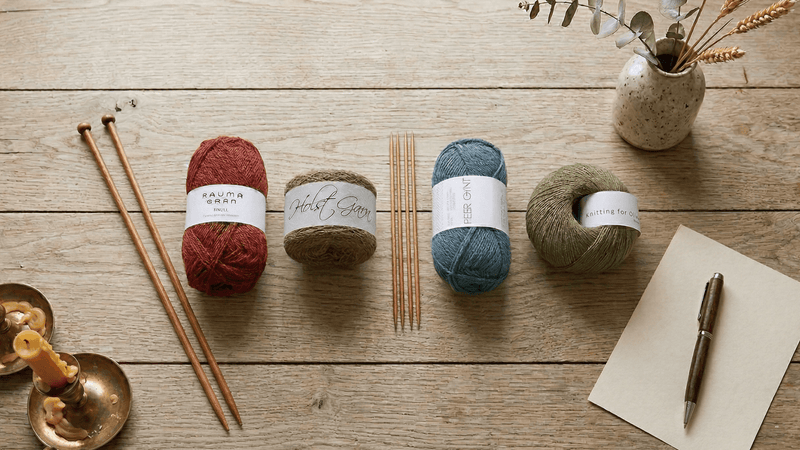
Rauma Finull – The Classic
100% Norwegian Wool · 175m / 50g · Fingering/Sport Weight · 135+ Colors
Finull is the yarn for Norwegian knitting traditions – developed and spun at Rauma Ullvarefabrikk in Romsdal, Norway, from 100% Norwegian Wool. With over 135 colors, it offers the largest palette of all Colorwork yarns. The carded fiber has just the right Hand Feel for Stranded Colorwork and blooms beautifully after washing. If you want to knit traditional Selbu Mittens, Setesdal Sweaters, or Fana Hats, Finull is the authentic choice. Learn more in our detailed Rauma Guide.
Holst Garn Supersoft – Soft, modern
50% Merino, 50% Shetland · 287m / 50g · Light Fingering · 100+ Colors
If Finull feels too rustic for you and you want a softer yarn that is still suitable for Colorwork, Holst Supersoft is an excellent alternative. The blend of Merino and Shetland gives the yarn enough hand feel for clean patterns, but significantly more softness than pure Shetland wool. 100+ colors and an unbeatable price make Supersoft a secret tip for Colorwork. Knitted doubled, it creates a wonderful DK weight for chunkier patterns. Details in the Holst Garn Guide.
Sandnes Peer Gynt – The Kofte classic since 1938
100% Norwegian Wool · 91m / 50g · DK · Needle Size 3.5–4mm · 50+ colors
Peer Gynt is the oldest yarn from Sandnes Garn and has been the standard yarn for Norwegian Kofte sweaters since 1938. As DK weight, it is significantly thicker than Finull – the patterns become chunkier, but the project progresses faster. Perfect for beginners in Colorwork who don’t want to start right away with Fingering weight. The Norwegian wool is not superwash, pills very little, and softens with every wear. The round, multi-ply structure provides excellent stitch definition – both for color patterns and for cable and Textured Stitch patterns. More about it in our Sandnes Assortment.
Knitting for Olive Merino – Ethical & fine
100% Merino · 250m / 50g · Fingering · 90+ colors
KFO Merino is not superwash and has a beautiful color palette with over 90 colors, perfect for modern Colorwork projects. The fiber is finer than Finull – the result is a softer, more elegant knit that can be worn directly on the skin. Ideal for Colorwork sweaters and accessories where both pattern and comfort are important. All details in the KFO Guide.
Which yarn for which purpose?
Traditional & authentic: Rauma Finull. No other yarn comes closer to the original Norwegian knitting tradition.
Soft & affordable: Holst Supersoft. Especially doubled, a great option for blankets and cushions with Stranded Colorwork.
Modern & skin-friendly: KFO Merino. For Colorwork sweaters worn all day long.
Thick & beginner-friendly: Sandnes Peer Gynt. DK Weight knits faster than Fingering and is ideal for the first Colorwork Sweater.
Color choice: Contrast is king
The most beautiful pattern fades if the colors don’t work together. Here are the most important principles:
Enough contrast between background and pattern color
The pattern must clearly stand out from the background. Sounds obvious, but is surprisingly often underestimated. A trick: photograph your yarn selection in black and white (most smartphones can do this). If you can’t clearly distinguish the colors in the black and white photo, the contrast is too low.
Warm-cool principle
Warm colors (red, orange, yellow, warm browns) visually come forward, cool colors (blue, green, gray) recede. Use this consciously: a warm pattern on a cool background “pops” out of the knitting. A cool pattern on a warm background looks subtler and more elegant.
Not too many colors at once
Traditional Stranded Colorwork patterns use a maximum of two colors per row. In the overall project there can of course be more – a Setesdal Sweater can easily use 5–8 different colors, but never more than two at the same time in one row. This keeps the technique manageable and the pattern readable.
For your first Colorwork project we recommend: two colors, strong contrast, simple pattern. You will have enough to do keeping the yarn tension even – the color choice doesn’t need to be another challenge.
Our Holst Garn Color Combinations and the Color Palette Tool help you visually compare colors before you order.
Technique: The three challenges in Colorwork
1. Yarn tension (Tension)
The biggest challenge in Colorwork is maintaining even tension. If the floats on the back are pulled too tight, the knitting puckers and the pattern distorts. Too loose and the floats sag.
The most important tip: Knit on a Circular Needle. Colorwork works better in rounds than back and forth because you are always working on the right side and can see the pattern. Most traditional Stranded Colorwork patterns are designed for circular knitting.
Spread your stitches slightly apart on the right needle before making the color change. This gives the float enough space and prevents it from pulling the fabric together.
2. Strand Holding
There are different methods to hold two strands simultaneously. The most common:
Continental + English: One strand in the left hand (Continental), one in the right (English). This way the hands never have to switch – the fastest method if you know both styles.
Both in one hand: Both strands in the left hand, guided over different fingers. Takes practice, but common among experienced Continental Knitters.
One strand at a time: Always pick up the current strand and drop the other. The slowest method, but easiest for beginners. No shame in this – speed comes with practice.
3. Steeks – Cutting without fear
Steeks are extra stitches worked in at places where the piece will later be cut – for example, for armholes or a front opening on cardigans. The idea of cutting into a finished knit is intimidating for many at first.
The good news: Steeks work excellently with a non-superwash yarn like Rauma Finull or Holst Supersoft . The natural scale layer of untreated wool prevents the stitches from unraveling. Before cutting, a line of crocheted chain stitches is placed on both sides of the steek – this secures the stitches. Then you cut boldly. With superwash yarns, the risk of stitches coming loose is significantly higher – another reason why traditional Colorwork yarns are the better choice.
Your first Colorwork project: Where to start?
Start small. A hat or a pair of mittens is the perfect beginner project – manageable in size, knit in the round (no back-and-forth), and you quickly have a result you can wear.
Classic beginner Patterns: Selbu Mittens (free Patterns can be found on Ravelry), the Riddari Hat by Védís Jónsdóttir, or – if you like it modern – the Colorwork designs by PetiteKnit.
And the most important thing: Wash your Gauge. For Colorwork, the Gauge is even more important than for single-color Knitting because the floats on the back affect the width of the fabric. Your Colorwork fabric will almost always be tighter than single-color – plan for half to a whole Needle Size larger than usual.
Frequently Asked Questions
Which Yarn is best suited for Norwegermuster?
The best are non-superwash Yarns with some Hand Feel. Rauma Finull (Fingering, 135+ colors) is the classic for fine, traditional patterns. Sandnes Peer Gynt (DK) is the standard Yarn for Norwegian Kofte Sweaters and ideal for beginners. Holst Supersoft and Knitting for Olive Merino are softer alternatives.
What is the difference between Fair Isle and Norwegermuster?
Fair Isle comes from the Scottish island of the same name and has its own pattern rules (never more than two colors per row, short floats). Norwegermuster is the umbrella term for Nordic Colorwork traditions from various regions of Norway. The knitting technique (Stranded Knitting) is the same for both.
Can I use superwash Yarn for Colorwork?
It works, but it’s not ideal. Superwash Yarns lack the natural Hand Feel that holds the stitches in place – the pattern can shift. Also, Steeks are riskier with superwash Yarn because the stitches are more likely to unravel. For your first Colorwork project, we recommend a non-superwash Yarn.
How do I prevent my Colorwork from becoming too tight?
Don’t pull the floats on the back too tight – that is the most common cause. Slightly spread the stitches on the right needle before you make the color change. Also, plan for half to a whole Needle Size larger than for single-color Knitting. And always knit a Gauge with the pattern, not single-color.
What are Steeks and do I need them?
Steeks are auxiliary stitches that are cut later – for example, for armholes in circularly knitted Sweaters. You don’t need them for Hats, Mittens, or closed Sweaters. They only become relevant for cardigans or projects with openings. Steeks work safely and reliably with non-superwash Wool.
How many colors can I use in a Norwegermuster?
A maximum of two per row – that is the golden rule. However, you can definitely use 5–8 different colors throughout the entire project, as long as only two are worked at the same time in each individual row.