Mohair - this fine, shimmering thread that transforms sweaters and scarves into feather-light works of art.
But behind its beauty lies responsibility: towards the animals, the people who work with them, and the nature from which these fibers come.
The Responsible Mohair Standard (RMS) is a seal that guarantees exactly that:
Ethically sourced mohair fibers, transparent and traceable - from the farm to the finished yarn.
In this article, we explain what RMS means, how the standard was developed, and what to look for when buying mohair.
Because every ball tells a story - and it should be a good one.
Why a standard for mohair became necessary
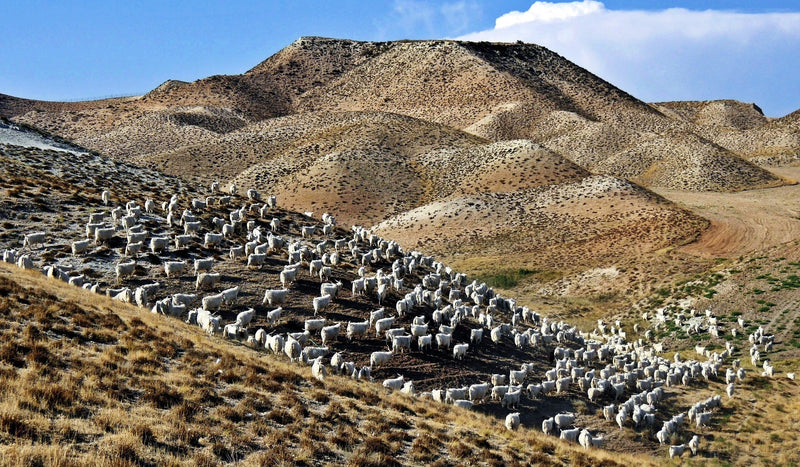
Mohair comes from the Angora goat, whose silky, shiny coat is among the finest natural fibers in the world.
These animals deserve care - yet the mohair industry has faced criticism in the past.
In 2018, animal welfare organizations uncovered abuses: careless shearing, poor husbandry conditions, lack of controls.
Many brands then withdrew from mohair production - and the industry faced a turning point.
The solution: a clear, independent standard that ensures mohair only under fair, transparent, and animal-friendly conditions is created.
This is how the Responsible Mohair Standard (RMS) developed.
What is the Responsible Mohair Standard (RMS)?
The RMS is an internationally recognized standard by Textile Exchange, an organization committed to responsible textile production.
It defines strict guidelines for animal welfare, land management, and traceability throughout the entire supply chain.
Goal of the RMS
The standard has three central tasks:
-
Ensuring animal welfare - every goat should be treated with respect.
-
Protecting the environment - responsible management of land and resources.
-
Creating transparency - complete traceability from farm to yarn.
💡 In short: RMS means every ball of Mohair knows its origin - and you can knit with a clear conscience.
The five pillars of the RMS
The Responsible Mohair Standard is based on five main principles that form the foundation of ethical mohair production.
1. Animal welfare
The heart of the RMS.
Angora goats must not suffer - neither in husbandry nor during shearing.
This includes:
-
Species-appropriate husbandry: Access to shade, clean water, and sufficient feed.
-
Gentle shearing: Only by trained personnel, without coercion or injury.
-
Animal health: Regular inspections and veterinary care.
RMS farms commit to caring for their animals with respect and care to be treated - entirely in the spirit of a gentle, natural fiber.
2. Sustainable management
The Angora goats mostly live in dry, sensitive landscapes like the expanses of South Africa.
Sustainable pasture management protects these ecosystems.
RMS requires:
-
Avoidance of overgrazing
-
Care of soil and vegetation
-
Promotion of biodiversity
The goal: A balance between animal husbandry and nature - so that Mohair production can also exist in the long term.
3. Social responsibility
The people who work with the goats are also in focus.
RMS ensures that workers are fairly treated, trained, and safely employed are.
-
Fair wages
-
Safe working conditions
-
No child or forced labor
Mohair is craftsmanship - and good craftsmanship requires a respectful work culture.
4. Traceability & Transparency
Every fiber that is RMS-certified applies, it must be documented throughout the entire supply chain.
This means:
-
Every farm, every spinning mill, every dye works is inspected and certified.
-
Mohair is Separated from non-certified fibers processed.
-
Each batch is Traceable back to the farm.
This transparency is rare in the textile world - and makes RMS so special.
5. Independent control
RMS is not a private label but a Independent, audited standard.
Certified operations are regularly inspected, usually annually.
This creates trust - not only for brands but also for us knitters.
RMS in practice: From farm to ball
This is how RMS certification works in practice:
-
Farm level:
The goats are kept according to RMS guidelines.
Auditors check husbandry, shearing, and feeding. -
Processing:
The Mohair is sorted, washed, and spun - separated from non-certified material. -
Certificate proof:
Each processing step receives a unique Transaction ID, which makes the Mohair traceable. -
End product:
Only when all stages are certified may a yarn carry the RMS seal - such as Knitting for Olive Soft Silk Mohair.
💡 This means: When you buy RMS Mohair, you support a system that actively promotes animal welfare and transparency.
RMS vs. other standards
There are several standards in the field of sustainable animal fibers - each with its own focus.
|
Standard |
Focus |
Animal species / Fiber |
|---|---|---|
|
RMS |
Animal welfare, transparency |
Angora goat (Mohair) |
|
RWS |
Animal welfare, pasture management |
Sheep (Wool) |
|
RAS |
Animal welfare, land management |
Alpaca |
|
GOTS |
Organic certification, environment |
Various natural fibers |
👉 RMS complements other standards - it ensures that Mohair is held to the same ethical level as certified wool or Alpaca.
Why RMS is important to us
At Bonifaktur, we love Mohair - its sheen, its lightness, its character.
But we also believe: Beauty should never come at the expense of animals or nature.
That’s why we pay attention to RMS-certified sources.
A yarn like Knitting for Olive Soft Silk Mohair stands for this attitude: It combines sensual quality with ethical responsibility.
When you knit with RMS Mohair, you hold not just a fiber in your hands, but a choice - for mindfulness, for craftsmanship, for the future.
How to recognize RMS-certified Mohair
-
Look out for the RMS label on the label or product page.
-
Check the Product Description to see if the origin is mentioned.
-
Trust brands that openly talk about their supply chains.
💚 Tip: RMS yarns often come with a slightly higher price - but this difference reflects real values: animal welfare, transparency, and durability.
Frequently Asked Questions (FAQ)
What exactly does RMS mean?
RMS stands for Responsible Mohair Standard - an international standard for responsibly produced Mohair fibers focusing on animal welfare, environment, and traceability.
Is RMS the same as “organic”?
Not quite. “Organic” usually refers to feed and pesticides, while RMS covers Animal welfare and the entire supply chain certified.
How can I be sure a product is RMS-certified?
Only products with the official RMS logo and verified supply chains are allowed to call themselves so.
Trusted manufacturers transparently provide certification.
Why is RMS Mohair more expensive?
Because it is sourced from controlled farms, with fair wages and independent audits - the price reflects genuine care.
Conclusion: Responsibility can be beautiful
RMS is more than a seal.
It is a promise - that every gram of Mohair was obtained with respect and responsibility.
For the goats, the landscapes, the hands that spin the yarn, and for us who create from it.
When you knit with RMS-certified Mohair, something bigger than a garment is created:
A piece of mindfulness - stitch by stitch.
🧶 Discover our selection of RMS-certified yarns such as Knitting for Olive Soft Silk Mohair and feel the difference - in quality, feel, and conscience.
