There are Yarns you know before you start Knitting. Léttlopi is one of them. The typical Lopapeysa – knit in the round, with a wide yoke of Colorwork motifs, worn directly on the skin – is so iconic that it is long more than Icelandic folklore. It is a living Knitting tradition, knitted worldwide: in Iceland itself, in Scandinavia, in Japan, in Brooklyn, and in Munich.
But what is behind this Yarn? What is Icelandic Wool, why does it behave differently from any other Wool, and what do you need to know if you want to knit a Lopapeysa? This article answers all these questions – from the genetics of Icelandic sheep to practical Knitting tips.
The Icelandic sheep: A thousand years of isolation
Icelandic sheep are genetically almost unique. When the Vikings settled Iceland in the 9th century, they brought their sheep with them – and since then the breed has not been crossed with other sheep breeds. No Merino crossbreeding. No Cheviot crossbreeding. Icelandic sheep have remained isolated for over a thousand years, have developed under extreme conditions – volcanoes, geysers, arctic winters – and in doing so developed a Wool that is unique in the textile industry.
The fleece of the Icelandic sheep consists of two clearly distinguishable layers:
Tog (the outer layer): Longer, somewhat coarser Fibers. They are water-repellent and act as a natural protective coat. Tog Fibers have high tensile strength and give the Wool its durability.
Þel (the inner layer, pronounced roughly "Thel"): Fine, short Fibers that lie close to the sheep's body. This layer is insulating, soft, and feels pleasant on the skin. It is the animal's natural undercoat.
When both layers are spun together – and that is exactly what Lopi is – a yarn is created with a characteristic that no other yarn can reproduce: light, exceptionally warm for its weight, with a fine natural Halo, and a slight grip that holds Stitches securely on the Needle. Icelandic wool is not the softest Yarn in the world – but it is the warmest (Wool) Yarn for its weight, and the only one that feels like Lopi.
What is the Lopapeysa?
The Lopapeysa – Icelandic for "Lopa jacket" – is more than a Sweater. It is a design principle.
The story begins in the 1950s. Icelandic women discovered the round Sweater construction of South American farmer shirts and began to combine the principle with Icelandic color motifs. (There is also reason to believe that the design of the round yoke was strongly inspired by the Greenlandic bead collar (Nuilarmiut) of Inuit women). The result: a round-knitted Sweater with a characteristic round yoke into which color motifs are knitted – geometric patterns, snowflakes, stylized animals, traditional Icelandic ornaments.
The round yoke is the key: The Sweater is knitted from bottom to top (Bottom-Up) in the round, without seams. Just before the neckline, the yoke stitches are reduced evenly through Decreases, while the color pattern is simultaneously worked in. The result is a naturally shaped, seamless shoulder-neck area that gives the Sweater its characteristic silhouette.
The classic Lopapeysa is cut large – oversized, wide, warm. It was originally workwear for fishermen and farmers who had to work in the Icelandic winter. Today it is a fashion favorite, knitting project, and cultural asset all at once.
Istex: The cooperative behind Lopi
Istex is the Icelandic textile cooperative that produces Lopi Yarns. Founded in 1977 as a union of Icelandic sheep farmers and textile companies, Istex is today the most important processor of Icelandic Wool. The Yarns are spun in Iceland – from raw Wool to finished Ball, the entire production takes place on the island.
This short production chain has a direct quality advantage: The Wool is processed after shearing, without long transport routes. This minimizes quality loss and ensures traceability from the sheep to the Ball.
At BONIFAKTUR we carry two Istex Yarns:
Léttlopi – the heart of the Lopapeysa
Léttlopi (pronounced "Lettlopi", Icelandic for "light Lopi") is the most commonly used Yarn for Lopapeysa Sweaters. It is an Aran weight with a Meterage of about 100m/50g and is knitted on Needle Size 4–6mm.
The special feature: Léttlopi is a singles yarn – not plied, but processed as a single spun thread. This makes it exceptionally light for its Warmth. A Lopapeysa in Léttlopi is surprisingly lightweight, even though it easily replaces a winter Sweater.
The color palette of Léttlopi includes natural colors (unbleached white, gray, brown, black – directly from various sheep breeds), as well as a wide selection of classic and modern tones for the Colorwork in the yoke. The Colorwork in a Lopapeysa often thrives on the combination of a natural tone with one or two other colors – the motifs resemble historical Icelandic textiles.
Léttlopi characteristics summarized:
– Weight: Aran (approx. 100m/50g) – Needle Size: 4–5mm – Composition: 100% Icelandic Wool (Tog + Þel) – Care: Hand Wash, max. 30°C, dry flat – Non-Superwash
Einband – the fine sibling
Einband (Icelandic for "one strand") is the significantly finer Lopi yarn. With about 250m/50g, it falls in the Lace to Light-Fingering range – knitted on Needle Size 2–3mm.
Einband is used for two different purposes:
Used alone on fine needles: For delicate shawls, Nordic-style hats, and lightweight garments. The result is a fine, light piece with the unmistakable Icelandic character.
Doubled (two strands together): Two strands of Einband knitted together correspond approximately to one strand of Léttlopi – and allow for subtler color gradients or mixing two colors in the yoke. This technique is very popular among experienced Lopapeysa knitters to achieve softer color transitions in the pattern.
Why is Lopi not Superwash – and why is that good?
Icelandic wool is deliberately not Superwash-treated. In the Superwash process, the natural scales of the wool fiber are either chemically smoothed or removed to prevent felting. This makes yarns machine washable – but also changes the feel and properties of the wool.
With Lopi, the natural scale structure is fully preserved. This has several effects:
Grip: This slight roughness that distinguishes Lopi from Merino yarn is not a weakness. It is the reason why color patterns in Stranded Colorwork sit so clearly – the fibers minimally stick to each other, and the stitches do not shift. Anyone who has knitted colorwork with heavily greased or smooth yarns immediately understands the difference.
Insulation: The untreated scale structure contributes to the exceptional warmth performance of Icelandic wool. The fibers can trap air better than Superwash-treated yarns.
Care: Hand Wash or gentle wool program at max. 30°C, no spinning, dry flat. A freshly washed Lopapeysa may settle slightly and feel softer after drying than before – this is normal and not a loss of quality. Many knitters report that their Lopapeysa is more comfortable to wear after the first wash.
Knitting a Lopapeysa: What You Should Know
Gauge is essential: Icelandic wool has a specific density. A Léttlopi sweater that is off by just one gauge unit can end up significantly too large or too small. Always knit a 15x15cm gauge swatch, wash it, and measure after drying.
Top-Down or Bottom-Up: Traditional Lopapeysa patterns are often knit from bottom to top – body and sleeves separately, then joined, yoke from bottom to top. Many modern patterns are top-down (from top to bottom) – the difference lies less in the result than in the knitting flow.
Stranded Colorwork in the Yoke: In the colorwork section, you carry two colors at the same time. The second color is carried across the back of the piece (float). These floats should not be too long – the resting color should be knitted in at least every 5 stitches to avoid tension.
Color Choice: Classic Lopapeysa color schemes use a natural tone (natural white, gray, black) as the background and one to two contrast colors in the yoke. Less is often more – the clear motifs are stronger in three colors than in five.
Yarn Ends: Colorwork creates many yarn ends that need to be woven in. Plan time for this after knitting. A blunt wool needle and patience – that’s all you need.
Icelandic Wool for Non-Lopapeysa Projects
Léttlopi and Einband also work naturally outside the classic Lopapeysa:
Hats: A classic Icelandic hat with color motifs in Léttlopi is a perfect weekend project. The cold of the Icelandic winter needs wool with real character.
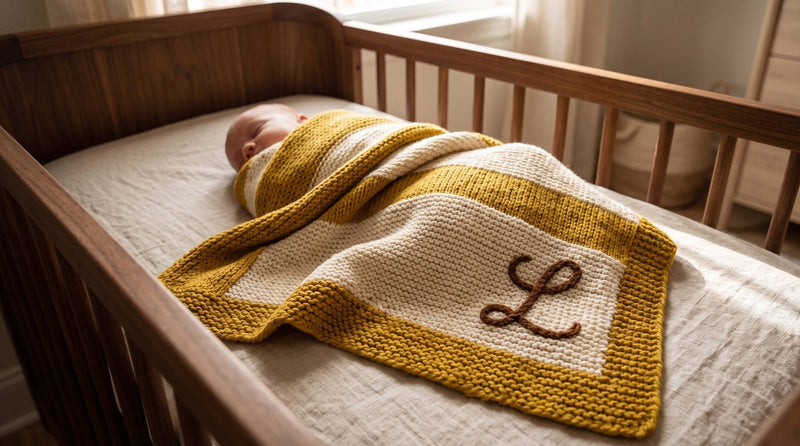
Blankets and Throw Shawls: Léttlopi on slightly larger needles creates a loose, lightweight fabric that is surprisingly warm as a blanket – thanks to the insulating properties of Icelandic wool.
Socks and Mittens: Einband on fine needles is the right weight for traditional Icelandic socks and mittens with Lopi patterns.
Children's Clothing: Children's patterns for Lopapeysa jackets in Léttlopi are quick to knit (due to the DK weight) and produce pieces that are sturdy enough for real children's use.
Read More: