
A hat is honest. It’s the knitting project where you can’t hide anything – no hem to adjust, no scarf to drape casually. What you knit is what you see. And that’s exactly why it’s so satisfying: because the result goes straight on the head and immediately shows what you can do.
Hats are one of the best beginner projects ever – manageable, quick to finish, with immediate success. But even for experienced knitters, they are anything but boring. Because behind the seemingly simple shape lie decisions: How is it constructed? Which yarn fits? Which Needles? How much Material do I need?
This article explains everything you need to know about knitting hats – from construction to Yarn Choice to the details that turn an okay hat into a really good one.
Why hats are such a great project
Before we dive into the technique, a quick question: Why hats, anyway?
First: Size. A hat is small enough to knit over a weekend. You see progress quickly, and the finished result is within reach. For beginners, this is a huge motivation boost – and for experienced knitters, a welcome change between big long-term projects.
Second: Technique. In a single hat, you can practice Circular Needle knitting, learn Decreases, try out different cuff patterns, and develop a sense of Fit. All this without committing to a months-long project.
Third: Gifts. Hats are the perfect knitting gift – personal, practical, and knitted in the recipient’s favorite color, a real statement. If you’re looking for more ideas for knitted gifts, check out our Gifts article .
The anatomy of a hat
Every hat basically consists of three parts, no matter how it is constructed:
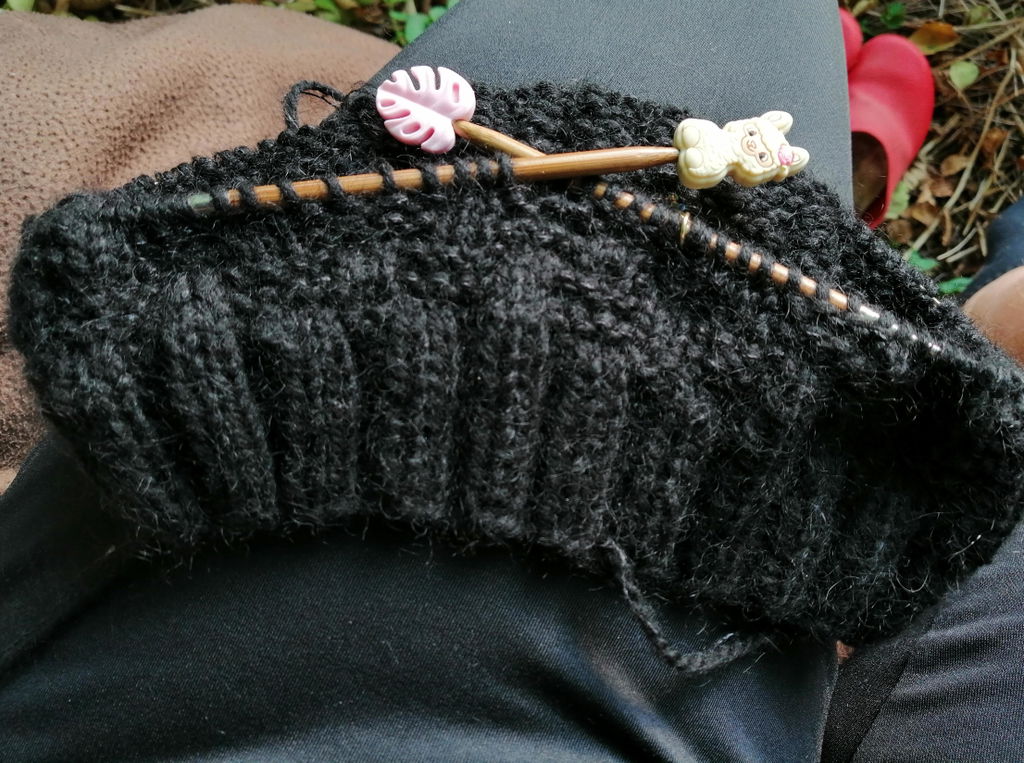
The Cuff is the lower edge – the part that sits on the forehead and holds the hat on the head. It determines how the hat fits and how snug it is. Typically, it is knitted in a Ribbing pattern (1 knit / 1 purl or 2 knit / 2 purl) because ribbing is elastic and adapts to the head. 1×1 ribbing fits tighter and looks finer, 2×2 ribbing is a bit looser and quicker to knit.
Some hats have a folded cuff – for this, you knit the cuff twice as long and fold it outward. This provides extra warmth at the ears and a nice, sporty look.
The Body is the main part of the hat. Here you decide on the pattern: stockinette stitch for a simple, modern result, Cable Pattern for texture and depth, Ribbing for continuous elasticity, or Colorwork for color and pattern.
The Crown is the tip – where you decrease to close the hat. The type of decreases determines the shape: Even decreases over 6–8 segments create a round crown. Fewer decrease segments (4) produce a more angular, geometric shape. The last stitches are drawn together and the yarn is woven in.
Construction Methods: Bottom-Up vs. Top-Down
There are two fundamentally different ways to knit a hat.
Bottom-Up: From the Cuff to the Crown
This is the classic method – and for most Knitters the more intuitive way. You cast on stitches, knit the cuff, then the body, and finally decrease until the hat is closed.
The advantages are obvious: The cuff fits immediately, you can try on the fit right away, and the Gauge at the beginning gives you reliable guidance for the rest. Bottom-Up is also the method used in most Patterns – if you are knitting from a Pattern, there is a high chance it is constructed Bottom-Up.
For circular knitting, you need either a short Circular Needle (40 cm length), a set of Double-Pointed Needles (four or five short needles), or you use the Magic Loop technique with a long Circular Needle. Which tool fits best, you can find out in our Circular Needle Guide.
Top-Down: From the Crown to the Cuff
With the Top-Down method, you start at the top – with a few stitches on the Double-Pointed Needles – and increase downward until the desired circumference is reached. Then you knit the body and finish with the cuff.
The biggest advantage: You can try on the hat at any time and perfectly adjust the length. If you're not sure how long the body should be, just knit until it fits. The downside: The increases at the beginning require a bit more practice, and the cuff must be knitted on at the end or picked up separately, which can be technically more challenging.
Which method for whom?
Bottom-Up is the better choice for beginners and for anyone knitting from an existing Pattern. Most classic hat Patterns are written Bottom-Up, and starting at the Cuff feels more natural.
Top-Down is well suited for more experienced Knitters who design hats without a fixed Pattern, want to adjust the Fit on the go, or already know the Top-Down construction from Sweaters – the basic comparison of both methods can be found in our Top-Down vs. Bottom-Up article.
Hat Shapes: More Variety Than You Think
Not every hat is a beanie. The shape depends on the construction and Yarn Weight – here are the most common types.
The classic Beanie
Close-fitting, without a fold, with a round or slightly pointed crown. The standard hat for everyday wear. Works in almost any Yarn Weight, looks just as good in stockinette stitch as with Ribbing or Cables.
The Slouchy Beanie
Longer than necessary, with a casual overhang at the back of the head. The difference from a regular beanie is mainly in the length of the body – you simply knit a few more centimeters before starting the Decreases. Slouchy Beanies work especially well in softer, draping yarns.
The Docker Hat
Short, with no or minimal Cuff, sits high on the head. A trend that hasn’t gone away for several years. Technically simple – the body is short, the Decreases start early. Especially nice in rustic yarns with character.
The Folded Brim Hat
Like a regular beanie, but with a wider Cuff that is folded outward. This gives the hat structure, warmth at the ears, and a sporty-classic look. Yarn consumption is slightly higher because the Cuff is doubled.
The right Yarn Choice for Hats
The yarn determines everything: Warmth, Fit, Durability, Feel. Here are the key considerations.
Which Yarn Weight?
Hats work well with a wide range of Yarn Weights – but not every weight suits every shape. If you're unsure what the weight categories exactly mean, our Yarn Weights article can help.
DK (3.5–4.5 mm Needles) is the most versatile range for hats. The knit is neither too thin nor too bulky, the stitches are easy to read, and patterns like Cables or Colorwork come out beautifully. A classic in DK: the Sandnes Peer Gynt – 100% Norwegian Wool, 91 m/50 g, durable and even machine washable at 30°. On the market since 1938, and made for Norwegian patterns.
Also perfect in DK: the Rowan Felted Tweed with its unique Tweedy stitch definition – 175 m/50 g, a blend of Wool, Alpaca, and Viscose. Hats made from Felted Tweed have a very distinctive character.
Worsted (4.5–5.5 mm Needles) is a bit thicker and grows faster. Ideal for warm winter hats and for knitters who want a quick result. The KFO Heavy Merino is an excellent choice here: 100% Merino (Non-Superwash), 125 m/50 g, OEKO-TEX certified, available in over 60 colors. Soft enough for direct skin contact on the forehead, stable enough for a hat that keeps its structure.
Those who love color reach for the Malabrigo Rios: 100% Superwash Merino, 192 m/100 g, hand-dyed in over 50 colors. The color depth of the Rios makes every hat unique – and superwash means the finished hat can go in the machine.
Aran (5–6 mm Needles) goes one step further. The Istex Léttlopi is the yarn for everyone who loves rustic, warm hats – 100% Icelandic Wool, 100 m/50 g. Léttlopi has character: The stitch definition is lively and natural, the hat becomes really warm. Perfect for Lopapeysa-inspired color patterns or simple, honest winter hats. Those who want to learn more about Icelandic wool will find plenty in the Icelandic Wool & Lopi article .
Superwash or not?
A hat is often worn, often dirty, and should be as easy to care for as possible. Superwash yarns like Malabrigo Rios are practical here – you can put them in the machine at a low temperature. Non-Superwash yarns like KFO Heavy Merino or Léttlopi require Hand Wash but reward you with better shape memory: the hat keeps its shape even after many wears and stretches less. A detailed comparison can be found in our Superwash vs. Non-Superwash article.
How much yarn do you need?
Yarn consumption depends on head circumference, hat shape, Yarn Weight, and pattern. As a rough guide for an adult hat in standard size:
- DK: approx. 100–150 m (depending on the pattern and whether with a slipped Ribbing)
- Worsted: approx. 80–130 m
- Aran: approx. 70–110 m
For most yarns in the BONIFAKTUR range, you only need one or two Balls – so a hat is also a wonderful Knitting Project to get to know a new yarn without committing to a larger Quantity.
The Gauge swatch: Yes, even for hats
Hats are small. Still: Knit a Gauge swatch. Especially for hats, the Fit is crucial – a few stitches more or less per 10 cm make the difference between “fits perfectly” and “slips over the eyes” or “presses on the forehead.” 20 minutes of Gauge swatching will save you hours of disappointment.
Knitting in the round: The method for hats
Hats are almost always knit in the round – which means: no seam, no Seaming, a continuous fabric. For this, you have three options.
Short Circular Needle (40 cm) is the most comfortable method for the main part of the hat. The stitches are evenly distributed on the needle, and you knit continuously in the round. However: when you have fewer stitches during the crown decreases, it gets too tight on the 40 cm needle – then you need to switch to Double-Pointed Needles or Magic Loop.
Double-Pointed Needles (DPNs) – four or five short needles on which you distribute the stitches. At first, it looks like a little hedgehog but quickly becomes routine. Double-Pointed Needles are perfect for crown decreases when the stitch count gets smaller.
Magic Loop – a long Circular Needle (80 cm or more), where you pull the cable out in the middle and divide the stitches into two halves. Ideal if you don’t like Double-Pointed Needles and want to work with just one needle.
More about the different needle types and materials can be found in our Needle Materials article.
Three Hat Ideas for Beginners
The Quick After-Work Hat
A ball KFO Heavy Merino, 5 mm needles, 2×2 ribbing cuff, body in stockinette stitch, even decreases over 8 segments. Finished in one evening. Nicely simple, perfect for gifting.
The Scandinavian Patterned Hat
Sandnes Peer Gynt or Istex Léttlopi in two colors – a classic star pattern or snowflake motif. Peer Gynt on 4 mm needles for a slightly finer stitch definition, Léttlopi on 5–6 mm for the rustic Lopi look. Norwegian patterns and hats are made for each other – more in our Stranded Colorwork article.
The Hand-Dyed Unique Hat
A skein Malabrigo Rios in your favorite color, 5 mm needles, a simple cable pattern or textured stitches. The color depth of the hand-dyed Rios makes a simple hat something special – and because the hat is small, one skein with 192 m is more than enough.
Summary
Knitting hats is both simple enough for beginners and varied enough to stay exciting even after the twentieth hat. The most important decisions are construction (bottom-up for starters), yarn weight (DK to Aran for most styles), and a yarn that suits the intended use – from easy-care and superwash to rustic and shape-retaining.
And the best thing about hats: they finish so quickly that you can just knit another if the first one isn’t perfect. Or a second one – in a different color. Or a third, as a gift. You see: it never ends.
Enjoy your knitting.
Read More
- Yarn Weights Explained: From Lace to Bulky
- The Best Yarns for Your First Sweater
- Top-Down vs. Bottom-Up: All Sweater Constructions Explained
- Knitting Gauge: Why These 20 Minutes Matter
- Superwash vs. Non-Superwash: The Big Yarn Comparison
- Knitting Stranded Colorwork
- Knitting Gifts: Ideas, Yarns, and Everything You Need to Know